
|
SXM-Info
Online Bookstore
|

|
|
Jump to:
Food, Wine, and Cooking |
History |
Humor |
Investment |
Island |
Mysteries |
Novels |
Science & Nature |
Travel |
CDs
Search all of Amazon |
SXM-Info Home Page
Novels
To purchase any of these books, just click on the title. Via the miracle of cyberspace, you will be transported to Amazon's cyberstore for a more detailed description of the book and instructions for purchase.
|
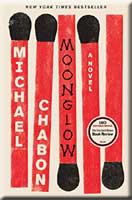
Moonglow - (about $17 hardcover, $15 Kindle, $11 paperback) -
Amazon.com Review, An Amazon Best Book of November 2016: In the days following the publication of Mysteries of Pittsburgh, Michael Chabon traveled to California to sit by his dying grandfather, a typically taciturn and reserved man. But Dilaudid had loosened his tongue, and out came a torrent of remarkable stories of full of secrets, love, pain, sex, and regret. Chabon's remarkable new "autobiographical novel" Moonglow is mined from, but not limited by, those conversations; as he states in his author's note at the head of the book: "In preparing this memoir, I have stuck to facts except when facts refused to conform with memory, narrating purpose, or the truth as I prefer to understand it. Wherever liberties have been taken … the reader is assured that they have been taken with due abandon." The result is a sprawling, yet intensely personal, paean to his grandparents, their lives together and as individuals. World War II and its atrocities cast long shadows, as does the Space Race and the titular moon, which hangs over the story as a bright dream of escape and a dark reminder of failed aspiration. Like The Mysteries of Pittsburgh, Wonder Boys, and especially The Amazing Adventures of Kavalier and Clay, this is classic Chabon: an intensely personal story uplifted by the shifting tectonic plates of truth and memory, floating atop his inimitably crafted, sometimes audacious, always original prose. Martha downloaded the book from our library in NY while here in SXM.
|
|
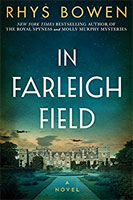
In Farleigh Field: A Novel of World War II by Rhys Bowen - (about $15 hardcover, $5 Kindle, $9 paperback) -
"Instantly absorbing, suspenseful, romantic, and stylish—like binge-watching a great British drama on Masterpiece Theater." —Lee Child, New York Times bestselling author
World War II comes to Farleigh Place, the ancestral home of Lord Westerham and his five daughters, when a soldier with a failed parachute falls to his death on the estate. After his uniform and possessions raise suspicions, MI5 operative and family friend Ben Cresswell is covertly tasked with determining if the man is a German spy. The assignment also offers Ben the chance to be near Lord Westerham's middle daughter, Pamela, whom he furtively loves. But Pamela has her own secret: she has taken a job at Bletchley Park, the British code-breaking facility.
As Ben follows a trail of spies and traitors, which may include another member of Pamela's family, he discovers that some within the realm have an appalling, history-altering agenda. Can he, with Pamela's help, stop them before England falls?
Inspired by the events and people of World War II, writer Rhys Bowen crafts a sweeping and riveting saga of class, family, love, and betrayal.
Martha got it free on her Kindle as part of our Amazon Prime membership.
|
|
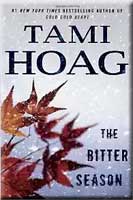
The Bitter Season by Tami Hoag - (about $15 hardcover, $13 Kindle, $16 paperback) -
Amazon says: Kovac and Liska take on multiple twisted cases as #1 New York Times bestselling author Tami Hoag explores a murder from the past, a murder from the present, and a life that was never meant to be.
As the dreary, bitter weather of late fall descends on Minneapolis, Detective Nikki Liska is restless, already bored with her new assignment to the cold case squad. She misses the rush of pulling an all-nighter and the sense of urgency of hunting a desperate killer on the loose. Most of all she misses her old partner, Sam Kovac.
Kovac is having an even harder time adjusting to Liska's absence, saddled with a green new partner younger than most of Sam's wardrobe. But Kovac is distracted from his troubles by an especially brutal double homicide: a prominent university professor and his wife, bludgeoned and hacked to death in their home with a ceremonial Japanese samurai sword. Liska's case-the unsolved murder of a decorated sex crimes detective-is less of a distraction: Twenty five years later, there is little hope for finding the killer who got away.
Meanwhile, Minneapolis resident Evi Burke has a life she only dreamed of as a kid in and out of foster homes: a beautiful home, a family, people who love her, a fulfilling job. But a danger from her past is stalking her idyllic present. A danger bent on destroying the perfect life she was never meant to have.
As the trails of two crimes a quarter of century apart twist and cross, Kovac and Liska race to find answers before a killer strikes again.
|
|
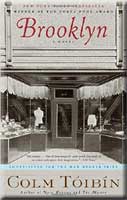
Brooklyn by Colm Tóibín - (about $19 hardcover, $11 Kindle, $9 paperback) -
Amazon Best of the Month, May 2009: Committed to a quiet life in little Enniscorthy, Ireland, the industrious young Eilis Lacey reluctantly finds herself swept up in an unplanned adventure to America, engineered by the family priest and her glamorous, "ready for life" sister, Rose. Eilis's determination to embrace the spirit of the journey despite her trepidation--especially on behalf of Rose, who has sacrificed her own chance of leaving--makes a bittersweet center for Brooklyn. Colm Tóibín's spare portrayal of this contemplative girl is achingly lovely, and every sentence rings with truth. Readers will find themselves swept across the Atlantic with Eilis to a boarding house in Brooklyn where she painstakingly adapts to a new life, reinventing herself and her surroundings in the letters she writes home. Just as she begins to settle in with the help of a new love, tragedy calls her home to Enniscorthy, and her separate lives suddenly and painfully merge into one. Tóibín's haunted heroine glows on the page, unforgettably and lovingly rendered, and her story reflects the lives of so many others exiled from home." Martha got this audiobook from our library in Salem, downloading it while we were in St Maarten.
|
|
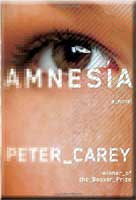
Amnesia by Peter Carey - (about $20 hardcover, $12 Kindle, $15 paperback) - From Amazon:
"The two-time Booker Prize winner now gives us an exceedingly timely, exhilarating novel, at once dark, suspenseful, and seriously funny, that journeys to the place where the cyber underworld collides with international power politics.
When Gaby Baillieux releases the Angel Worm into Australia's prison computer system, hundreds of asylum-seekers walk free. And because the Americans run the prisons (let's be honest: as they do in so many parts of her country) the doors of some five thousand jails in the United States also open. Is this a mistake, or a declaration of cyber war? And does it have anything to do with the largely forgotten Battle of Brisbane between American and Australian forces in 1942? Or with the CIA-influenced coup in Australia in 1975? Felix Moore, known to himself as "our sole remaining left-wing journalist," is determined to write Gaby's biography in order to find the answers, to save her, his own career, and, perhaps, his country. But how to get Gaby, who is on the run, scared, confused, and angry, to cooperate?
Bringing together the world of hackers and radicals with the "special relationship" between the United States and Australia, and Australia and the CIA, Amnesia is a novel that speaks powerfully about the often hidden past, but most urgently about the more and more hidden present."
|
|
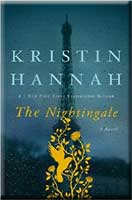
The Nightengale by Kristen Hannah - (about $16 hardcover, $6 paperback) - From Amazon:
Kristin Hannah is a popular thriller writer with legions of fans, but her latest novel, The Nightingale, soars to new heights and will earn her even more ecstatic readers. Both a weeper and a thinker, the book tells the story of two French sisters, one in Paris, one in the countryside, during WWII. Each is crippled by the death of their beloved mother and cavalier abandonment of their father; each plays a part in the French underground; each finds a way to love and forgive. If this sounds sudsy. . . well, it is, a little. . . but a melodrama that combines historical accuracy (Hannah has said her inspiration for Isabelle was the real life story of a woman who led downed Allied soldiers on foot over the Pyrenees) and social/political activism is a hard one to resist. Even better to keep you turning pages: the central conceit works – the book is narrated by one of the sisters in the present, though you really don't know until the very end which sister it is. Fast-paced, detailed, and full of romance (both the sexual/interpersonal kind and the larger, trickier romance of history and war), this novel is destined to land on the top of best sellers lists and night tables everywhere. Martha listened to the audio borrowed from our local library.
|
|
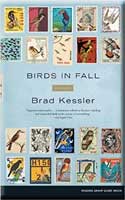
Birds in Fall by Brad Kessler - (about $12 paperback, $11 Kindle) - From Publishers Weekly:
This brooding novel is a modern-day retelling of the Greek myth of Ceyx and Alcyone. In the eerie first chapter, Russell, a New York ornithologist, is on a flight to Amsterdam when the airplane plunges into the Atlantic near Nova Scotia. The victims' family members, including Russell's wife, Ana, gather near the site on Trachis Island to wait for word from search crews. Their host is Kevin, an innkeeper who witnessed the crash and occupies himself making the anxious guests comfortable. There, the disparate group, a global mix of parents, siblings, spouses and aunts and uncles, begins the difficult work of dealing with the tragedy, with Ana's story at the center, while Kevin, distracted by his duties, grows apart from his partner, Douglas. The protagonists are sympathetic and complex and Kessler, a journalist, children's book writer and novelist (Lick Creek), writes with lyricism, but also with studied seriousness. |
|
|
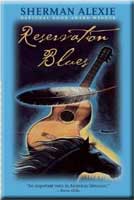
Reservation Blues by Sherman Alexie - (about $12 paperback, $10 Kindle) - From Amazon:
Many may remember the tale of Robert Johnson, the musician who sold his soul to the devil at the crossroads in exchange for being the best blues guitarist around.
What many may not know is that after this tragic deal in Mississippi, Johnson ended up in a small town on the Spokane Indian reservation in Washington state - at least that's how author Sherman Alexie tells it.
In Reservation Blues, Alxie spins the fictional tale of Johnson's adventure at a new crossroads, this one in a small town called Wellpinit, Wash. It is here that he comes to seek out Big Mom, a local medicine woman, and, in so doing, leaves his famous guitar in the hands of misfit storyteller Thomas Builds-the-Fire.
Builds-the-Fire, brought back from Alexie's last book, The Lone Ranger and Tonto Fistfight in Heaven, takes up Johnson's magical guitar and, along with Victor Joseph, Junior Polatkin and two Flathead Indian sisters named Chess and Checkers, goes on to build a reservation blues band that takes the Northwest by storm.
As the band plays club after club, Alexie uses music as a crosscultural bridge, without compromising the cultural integrity of his characters. The band members seem to take on the gamut of problems faced by Indians on the reservation today, battling everything from alcoholism to violence, political corruption to sexual abuse.
Ghosts from the past, both personal and historical haunt the musicians, serving both to hold them back and urge them on. It would seem that the scars of abuse run deep.
|
|
|
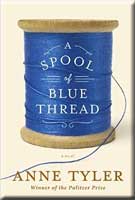
A Spool of Blue Thread by Anne Tyler - (about $16 paperback, $11 Kindle) - An Amazon Best Book of the Month for February 2015: It's pretty clear that Anne Tyler is comfortable with the art of storytelling. From the first lines of A Spool of Blue Thread, there's an urge to sit back and settle into the cadence of her words. Or, rather, Abby Whitshank's words as she recounts the story of how she fell in love with Red Whitshank in 1959. But don't get too comfortable. Anne Tyler understands that, despite their best intentions, family members don't often let each other settle back for very long and the Whitshanks, a Baltimore clan whose history is told through several generations in this sensitive and empathetic novel, is no different than most. As Abby and Red age, their children are drawn back to their sprawling house. When the second part of the novel moves back in time, the shift is jarring at first; but after a fifty year writing career (this is her 20th novel), Tyler has the end in sight. This is a book about the stories we tell each other and the little moments that make up our lives. - Chris Schluep Despite all this praise, Martha didn't like it that much. |
|
|
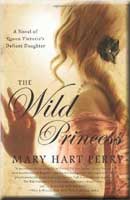
The Wild Princess: A Novel of Queen Victoria's Defiant Daughter by by Mary Hart Perry - (about $11 paperback, $10 Kindle) - From Amazon: The astronomical success of the historical novels of Phillipa Gregory and Christine Trent prove that readers simply can't get enough of the British royals and now Mary Hart Perry enters the fray with an exciting, deliciously sensual novel of Queen Victoria's "wild child" daughter, the Princess Louise. The Wild Princess transports us back to Victorian England and plunges us into the intrigues of the royal court, where the impetuous Louise brazenly followed no one's rules but her own, even marrying a commoner, which no one of royal blood had done in the previous three centuries. Filled with rich period deal, The Wild Princess is an exciting, enthralling read. The Tudors have gotten the lion's share of attention in historical fiction; it's high time Queen Victoria and her family got their due!
Contessa recommended this.
|
|
|
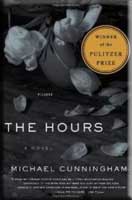
The Hours by Michael Cunningham - (about $12 paperback, $10 Kindle) - From Amazon: A daring, deeply affecting third novel by the author of A Home at the End of the World and Flesh and Blood.
In The Hours, Michael Cunningham, widely praised as one of the most gifted writers of his generation, draws inventively on the life and work of Virginia Woolf to tell the story of a group of contemporary characters struggling with the conflicting claims of love and inheritance, hope and despair. The narrative of Woolf's last days before her suicide early in World War II counterpoints the fictional stories of Samuel, a famous poet whose life has been shadowed by his talented and troubled mother, and his lifelong friend Clarissa, who strives to forge a balanced and rewarding life in spite of the demands of friends, lovers, and family.
Passionate, profound, and deeply moving, this is Cunningham's most remarkable achievement to date. And it won the Pulitzer Prize.
|
|
|
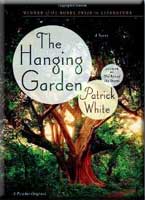
The Hanging Garden by Patrick White - (about $12 paperback, $10 Kindle) - From Booklist: In January 1981, having posted his completed autobiography, Flaws in the Glass, to his editor for review, White, the only Australian ever to have won the Nobel Prize for Literature, immediately began work on his next novel. It was to be a love story, tracing the intertwined paths of two young adolescents who have escaped the war in Europe to find tenderness despite bleak and foreign circumstance. Eirene is from Greece; her Communist father was murdered in prison, and her mother has abandoned her in Australia to return to the war (and her new lover). Gilbert, lean, blond, and rapidly shedding his boyhood, has been sent to Sydney to escape the Blitz. Their connection is initially elusive, fraught with childhood politics and the bristling closed-off-ness of orphaned children. But, one senses, there are profound and beautiful epiphanies in store for the young lovers. The precise contours of these moments are, however, left for us to imagine: White, failing in health and increasingly distracted by political issues, stopped work on the story in April (on ANZAC Day, Australia's Memorial Day, to be precise) and never completed it. This book is, therefore, but a glimpse, a tantalizing, sensate, glimpse, of one of the twentieth century's top writers, in raw but still beautiful form. --Brendan Driscoll
Some friends came to our house for dinner over the holidays bringing their adult daughter who is an editor at Picador. She sent Martha a copy of this book. Martha is only 20 pages in and claims the book is wonderful already.
|
|
|
Like Life by Lorrie Moore - (about $12 paperback, $8 Kindle) - This is actually a book of short stories. Martha borrowed the Kindle version from our local Salem, NY library while we were here on St Maarten. We no longer have to use up half a suitcase for reading material! In any event, Martha likes the book and Amazon says: "
In Like Life's eight exquisite stories, Lorrie Moore's characters stumble through their daily existence. These men and women, unsettled and adrift and often frightened, can't quite understand how they arrived at their present situations. Harry has been reworking a play for years in his apartment near Times Square in New York. Jane is biding her time at a cheese shop in a Midwest mall. Dennis, unhappily divorced, buries himself in self-help books about healthful food and healthy relationships. One prefers to speak on the phone rather than face his friends, another lets the answering machine do all the talking. But whether rejected, afraid to commit, bored, disillusioned or just misunderstood, even the most hard-bitten are not without some abiding trust in love."
|
|
|
Sandy Ground by Tim Stelma - (about $12 paperback, $3 Kindle) -
This is the third book in a trilogy written with SXM as the location. What are all these dead people doing in our yard? This is the question facing Shores Detective Frank Davis when a quiet, affluent suburb of Detroit becomes the scene of a double shooting. He has little to work with and his only witness isn't talking. Frank believes there is much more to it than is on the surface. His suspicions are confirmed when the body count begins to rise and he embarks on a race against time to solve the mystery of the multiple murders. His search brings him to St. Martin where he uncovers a life-changing revelation in Sandy Ground. The first novel is about a young woman getting an all-over tan and more at Happy Bay and the second uses a Cole Bay Band as a backdrop. Get them all on your Kindle for less than $10. Contessa had mentioned these books to me after the last newsletter and Tim sent a friend request. Here's his Facebook page.
|
|
|
The Goldfinch by Donna Tartt - (about $17 paperback or hardcover, $7.50 Kindle) -
This won the Pulitzer Prize. Amazon.com Review:
Theo Decker, a 13-year-old New Yorker, miraculously survives an accident that kills his mother. Abandoned by his father, Theo is taken in by the family of a wealthy friend. Bewildered by his strange new home on Park Avenue, disturbed by schoolmates who don't know how to talk to him, and tormented above all by his longing for his mother, he clings to the one thing that reminds him of her: a small, mysteriously captivating painting that ultimately draws Theo into the underworld of art.
As an adult, Theo moves silkily between the drawing rooms of the rich and the dusty labyrinth of an antiques store where he works. He is alienated and in love--and at the center of a narrowing, ever more dangerous circle.
The Goldfinch is a mesmerizing, stay-up-all-night and tell-all-your-friends triumph, an old-fashioned story of loss and obsession, survival and self-invention, and the ruthless machinations of fate.
|
|
|
Amsterdam by Ian McEwan - (about $11 paperback) -
This won the Booker prize in 1998. Amazon.com Review:
When good-time, fortysomething Molly Lane dies of an unspecified degenerative illness, her many friends and numerous lovers are led to think about their own mortality. Vernon Halliday, editor of the upmarket newspaper the Judge, persuades his old friend Clive Linley, a self-indulgent composer of some reputation, to enter into a euthanasia pact with him. Should either of them be stricken with such an illness, the other will bring about his death. From this point onward we are in little doubt as to Amsterdam's outcome, it's only a matter of who will kill whom. In the meantime, compromising photographs of Molly's most distinguished lover, foreign secretary Julian Garmony, have found their way into the hands of the press, and as rumors circulate he teeters on the edge of disgrace. However, this is McEwan, so it is no surprise to find that the rather unsavory Garmony comes out on top. Ian McEwan is master of the writer's craft, and while this is the sort of novel that wins prizes, his characters remain curiously soulless amidst the twists and turns of plot.
|
|
|
Seek my Face by John Updike - (about $4 paperback or hardcover) -
This was Updike's most experimental of the experimental novels he published from 1992 until this one in 2002. It is supposedly a work of fiction wherein a young woman interviews an older woman (Hope McCoy) about her marriages to two famous abstract expressionist artists. The first is called Zack McCoy, but as the book says he was the founder of drip painting in the 50's, it is obvious that he is Jackson Pollock, aka Jack the Dripper. Updike admits as much when the forward says that a large number of the details come from Naifeh and Smith's "Jackson Pollock: An American Saga." Updike follows reality at least through the car crash that killed Pollock, leaving his wife Lee Krasner as his widow. At this point Hope diverges a bit from Lee as she goes on with a painter of flags (our neighbor here in Cupecoy, Jasper Johns) and eventually marries the pop artist who did cartoon dot paintings (Roy Lichtenstein). The book is 300 solid pages of text, one chapter, a dozen or so sentences - Updike at his prolix best. It is actually amusing if your wife is ABD PhD Rutgers in Art History.
|
|
The Orchardist by Amanda Coplin - (about $11 paperback) -
This was Amazon's Book of the Month in August 2012. We listened to an audio version from our local library.
At the turn of the twentieth century, in a rural stretch of the Pacific Northwest, a reclusive orchardist, William Talmadge, tends to apples and apricots as if they were loved ones. A gentle man, he's found solace in the sweetness of the fruit he grows and the quiet, beating heart of the land he cultivates. One day, two teenage girls appear and steal his fruit from the market; they later return to the outskirts of his orchard to see the man who gave them no chase. Feral, scared, and very pregnant, the girls take up on Talmadge's land and indulge in his deep reservoir of compassion. Just as the girls begin to trust him, men arrive in the orchard with guns, and the shattering tragedy that follows will set Talmadge on an irrevocable course not only to save and protect but also to reconcile the ghosts of his own troubled past.
Transcribing America as it once was before railways and roads connected its corners, Amanda Coplin weaves a tapestry of solitary souls who come together in the wake of unspeakable cruelty and misfortune. She writes with breathtaking precision and empathy, and in The Orchardist she crafts an astonishing debut novel about a man who disrupts the lonely harmony of an ordered life when he opens his heart and lets the world in.
|
|
|
Say You're One of Them by Uwem Akpan - (about $6 paperback) -
This is not a novel, but a collection of short stories, chosen by Oprah for her book club. Amazon says "Each story in this jubilantly acclaimed collection pays testament to the wisdom and resilience of children, even in the face of the most agonizing circumstances.
A family living in a makeshift shanty in urban Kenya scurries to find gifts of any kind for the impending Christmas holiday. A Rwandan girl relates her family's struggles to maintain a facade of normalcy amid unspeakable acts. A young brother and sister cope with their uncle's attempt to sell them into slavery. Aboard a bus filled with refugees, a microcosm of today's Africa, a Muslim boy summons his faith to bear a treacherous ride across Nigeria. Through the eyes of childhood friends the emotional toll of religious conflict in Ethiopia becomes viscerally clear.
Uwem Akpan's debut signals the arrival of a breathtakingly talented writer who gives a matter-of-fact reality to the most extreme circumstances in stories that are nothing short of transcendent."
We met Uwem at a dinner party at the house of a former editor for O magazine. The director of Yadoo was there and Uwem was in residence at Yadoo. It was an interesting evening. He was barely a teenager when I worked in Lagos, but was not surprised by my recollections of the city. BTW, he is a Jesuit priest.
|
|
|
Transit of Venus by Shirley Hazzard - (about $11 paperback) -
The Transit of Venus is considered Shirley Hazzard's most brilliant novel. It tells the story of two orphan sisters, Caroline and Grace Bell, as they leave Australia to start a new life in post-war England. What happens to these young women--seduction and abandonment, marriage and widowhood, love and betrayal--becomes as moving and wonderful and yet as predestined as the transits of the planets themselves. Gorgeously written and intricately constructed, Hazzard's novel is a story of place: Sydney, London, New York, Stockholm; of time: from the fifties to the eighties; and above all, of women and men in their passage through the displacements and absurdities of modern life. It's a very old book now, but it won the National Book Critics Circle Award in 1980. Martha highly recommends it.
|
|
|
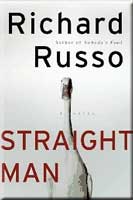
Straight Man by Richard Russo - about $5 (used) -
From Amazon: Straight Man is hilarious sport, with a serious side. William Henry Devereaux Jr., is almost 50 and stuck forever as chair of English at West Central Pennsylvania University. It is April and fear of layoffs--even among the tenured--has reached mock-epic proportions; Hank has yet to receive his department budget and finds himself increasingly offering comments such as "Always understate necrophilia" to his writing students. Then there are his possible prostate problems and the prospect of his father's arrival. Devereaux Sr., "then and now, an academic opportunist," has always been a high-profile professor and a low-profile parent.
Though Hank tries to apply William of Occam's rational approach (choose simplicity) to each increasingly absurd situation, and even has a dog named after the philosopher, he does seem to cause most of his own enormous difficulties. Not least when he grabs a goose and threatens to off a duck (sic) a day until he gets his budget. The fact that he is also wearing a fake nose and glasses and doing so in front of a TV camera complicates matters even further. Hank tries to explain to one class that comedy and tragedy don't go together, but finds the argument "runs contrary to their experience. Indeed it may run contrary to my own." It runs decidedly against Richard Russo's approach in Straight Man, and the result is a hilarious and touching novel.
|
|
|
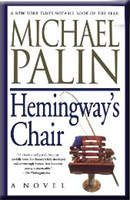
Hemingway's Chair by Michael Palin - about $16 - From Amazon.com Review:
Martin Sproale is an assistant postmaster obsessed with Ernest Hemingway. Martin lives in a small English village, where he studies his hero and putters about harmlessly--until an ambitious outsider, Nick Marshall, is appointed postmaster instead of Martin. Slick and self-assured, Nick steals Martin's girlfriend and decides to modernize the friendly local office by firing dedicated but elderly employees and privatizing the business. Suddenly, gentle Martin is faced with a choice: meedly accept defeat as he always has, or fight for what he believes in, as his hero, Hemingway, would.
Filled with Michael Palin's trademark wit and good humor, this novel is for anyone who has ever dreamed of triumphing over the technocrats and backstabbers of the world. Hilarious, touching, and ultimately inspirational, Hemingway's Chair will make readers stand up and cheer.
In case you don't remember, Michael Palin was the lumberjack in the famous Monty Python skit and he was the customer to John Cleese's pet shop owner in the parrot sketch.
|
|
 |
|
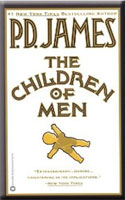
The Children of Men by PD James - $8 used From Amazon.com Review:
Told with P. D. James' s trademark suspense, insightful characterization, and riveting storytelling, "The Children of Men" is a story of a world with no children and no future. The human race has become infertile, and the last generation to be born is now adult. Civilization itself is crumbling as suicide and despair become commonplace. Oxford historian Theodore Faron, apathetic toward a future without a future, spends most of his time reminiscing. Then he is approached by Julian, a bright, attractive woman who wants him to help get her an audience with his cousin, the powerful Warden of England. She and her band of unlikely revolutionaries may just awaken his desire to live . . . and they may also hold the key to survival for the human race.
This is the PD James who wrote the Adam Dalgliesh detective novels. She is also Baroness James of Holland Park, a Conservative life peer in the House of Lords. This book was made into a feature film of the same name in 2006. Despite substantial changes from the book, James was reportedly pleased with the adaptation and proud to be associated with the film.
|
|
 |
|
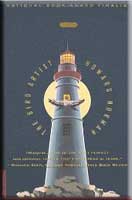
The Bird Artist by Howard Norman - $7.39 From Amazon.com Review:
Though judging a book by its cover is ill-advised, assessing The Bird Artist by its first paragraph is a safe bet. Howard Norman's second novel lives up to all expectations promised by the kind of beginning that makes a reader beg for more and then panic that the rest will not be as good: "My name is Fabian Vas. I live in Witless Bay, Newfoundland. You would not have heard of me." "Obscurity is not necessarily failure, though; I am a bird artist, and have more or less made a living at it. Yet I murdered the lighthouse keeper, Botho August, and that is an equal part of how I think of myself."
There are echoes of Vladimir Nabokov's infamous narrator, Humbert Humbert, in Fabian's confessional tone, witty humor, and emotional detachment from the series of bizarre events he describes. Set at the turn of the century in a remote cod-fishing community, The Bird Artist is a love story of sorts, filled with curious characters and a chowder restaurant. The men wear "knitted underwear all year round lined with fleece calico" and periodically escape the island to pursue their livelihoods on the sea. But the women are land bound. Helen Twombly suspects fellow villagers of stealing her milk bottles. Alaric Vas suffers from arthritis that no liniment relieves and plots her son's arranged marriage with a fourth cousin in Richibucto, New Brunswick. Meanwhile, Fabian's childhood love, Margaret Handle, propels herself and the plot forward with unwieldy energy. How did things for a mild-mannered man who just likes "to wake up early, wash my face, and get out and draw birds" go so wrong?
|
|
 |
|
Norman, a folklorist and naturalist, presents us with the possible explanations in the form of fine details from an island life he researched while living in a remote Inuit whale-hunting community. He carefully examines the inner isolation of his characters. The severe landscape and the weather serve as the perfect metaphor. If you're looking for linguistic pyrotechnics, Norman's economy won't suit you. In The Bird Artist--a finalist for the 1994 National Book Award--there is as much to admire on the page as what's not. --Cristina Del Sesto
|
|
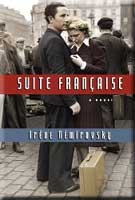
Suite Française by Irene Nemirovsky - $16.50 From The Washington Post:
This extraordinary work of fiction about the German occupation of France is embedded in a real story as gripping and complex as the invented one. Composed in 1941-42 by an accomplished writer who had published several well-received novels, Suite Française, her last work, was written under the tremendous pressure of a constant danger that was to catch up with her and kill her before she had finished.
Irène Némirovsky was a Jewish, Russian immigrant from a wealthy family who had fled the Bolsheviks as a teenager. She spent her adult life in France, wrote in French but preserved the detachment and cool distance of the outsider. She and her husband were deported to Auschwitz in 1942, where he was gassed upon arrival and she died in the infirmary at the age of 39. Her manuscript, in minuscule and barely readable handwriting, was preserved by her daughters, who, ignorant of the fact that these notebooks contained a full-fledged masterpiece, left it unread until 60 years later. Once published, with an appendix that illuminates the circumstances of its origin and the author's plan for its completion, it quickly became a bestseller in France. It is hard to imagine a reader who will not be wholly engrossed and moved by this book.
|
|
 |
Némirovsky's plan consisted of five parts. She completed only the first two before she was murdered. Yet they are not fragmentary; they read like polished novellas. The first, "Storm in June," gives us a cross section of the population during the initial exodus from the capital, when a battle for Paris was expected and people fled helter-skelter south, so that the roads were clogged with refugees of all classes. Némirovsky shows how much caste and money continued to matter, how the nation was not united in the face of danger and a common enemy. In her account, the well-to-do continue to be especially egotistical and petty. And yet a deep, unsentimental sympathy pervades this panorama. Looking up to the sky at enemy planes overhead, the refugees who have to sleep on the street or in their cars "lacked both courage and hope. This was how animals waited to die. It was the way fish caught in a net watch the shadow of the fisherman moving back and forth above them." I can't think of a more chilling and concise image to convey the helplessness of civilians in an air raid.
Not being French herself but steeped in French culture may have made it easier for Némirovsky to achieve her penetrating insights with Flaubertian objectivity. She gives us startling, steely etched sketches of both collaboration and resistance among people motivated by personal loyalties and grievances that date from before the war.
The second part, "Dolce" (the title -- Italian for "sweet" -- derives from Némirovsky's plan to give the work a musical structure), covers the occupation by the Germans of a small village, from the so-called armistice in June 1940 to the Soviet Union's entry into the war a year later. One can forget that there was a period after the defeat of France when World War II could be seen simply as a war between Germany and Britain. The villagers yearn for peace, and many are indifferent as to who wins, England or Germany, as long as their own men come home. Némirovsky is superb in describing how fraternization comes about, including French girls and women giving in to the attractions of the handsome German occupants -- there are no other men around, most of the French men having been taken prisoner. But the unnatural situation also breeds fierce feelings of resentment and humiliation. Némirovsky embodies this conflict in the story of a woman who falls in love with a German officer and at the same time hides a villager wanted for the murder of another German -- a murder motivated partly by patriotic hatred and partly by marital jealousy.
One puzzling omission from the spectrum of conquered and cowering French society is the Jews -- the one group that was more endangered than any other, as Némirovsky knew only too well. Perhaps she wanted to save the fate of the Jews for the next part, which was to be entitled "Captivity." Even so, when one thinks of the threat the Jewish population endured even at this early stage of persecution, one feels the significant gap here.
Still, this is an incomparable book, in some ways sui generis. While diaries give us a day-to-day record, their very inclusiveness can lead to tedium; memoirs, on the other hand, written at a later date, search for highlights and illuminate the past from the vantage point of the present. In Némirovsky's Suite Française we have the perfect mixture: a gifted novelist's account of a foreign occupation, written while it was taking place, with history and imagination jointly evoking a bitter time, correcting and enriching our memory.
Reviewed by Ruth Kluger
|
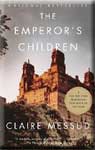
The Emperor's Children (Paperback) by Claire Messud - $10.17 From The New Yorker
In this witty examination of New York's chattering classes, which opens in the spring of 2001, the despot of the title is Murray Thwaite, a famous journalist who made his name in the Vietnam era. The next generation, however, is having trouble gaining traction. Murray's daughter, Marina, unable to complete a long-overdue book on the cultural significance of children's clothing, has moved back into her parents' Upper West Side apartment and is doing a lot of yoga. Her two best friends — Danielle, a television producer, and Julius, a gay freelance critic — are similarly ambitious and entitled, without being particularly driven. All three find sex the easiest way to transform themselves. Only Murray's brainy and profoundly disenfranchised nephew from upstate aggressively pursues his belief in the true and the good, but he proves to be a sort of literary terrorist, threatening to blow the family apart. The humorous intimacies of Messud's portraits do not, finally, soften the judgments behind them: If this is what's become of the liberal imagination, is it worth fighting for?
|
|
 |
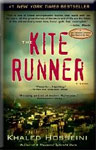
The Kite Runner by Khaled Hosseini - $10.20 From Amazon.com:
In his debut novel, The Kite Runner, Khaled Hosseini accomplishes what very few contemporary novelists are able to do. He manages to provide an educational and eye-opening account of a country's political turmoil--in this case, Afghanistan--while also developing characters whose heartbreaking struggles and emotional triumphs resonate with readers long after the last page has been turned over. And he does this on his first try.
|
The Kite Runner follows the story of Amir, the privileged son of a wealthy businessman in Kabul, and Hassan, the son of Amir's father's servant. As children in the relatively stable Afghanistan of the early 1970s, the boys are inseparable. They spend idyllic days running kites and telling stories of mystical places and powerful warriors until an unspeakable event changes the nature of their relationship forever, and eventually cements their bond in ways neither boy could have ever predicted. Even after Amir and his father flee to America, Amir remains haunted by his cowardly actions and disloyalty. In part, it is these demons and the sometimes impossible quest for forgiveness that bring him back to his war-torn native land after it comes under Taliban rule. ("...I wondered if that was how forgiveness budded, not with the fanfare of epiphany, but with pain gathering its things, packing up, and slipping away unannounced in the middle of the night.")
|
|
 |
Some of the plot's turns and twists may be somewhat implausible, but Hosseini has created characters that seem so real that one almost forgets that The Kite Runner is a novel and not a memoir. At a time when Afghanistan has been thrust into the forefront of America's collective consciousness ("people sipping lattes at Starbucks were talking about the battle for Kunduz"), Hosseini offers an honest, sometimes tragic, sometimes funny, but always heartfelt view of a fascinating land. Perhaps the only true flaw in this extraordinary novel is that it ends all too soon. --Gisele Toueg
The Magic Christian by Terry Southern - $11.05 From the Inside Flap: One of the funniest, cruelest, and most savagely revealing books about American life ever written, The Magic Christian has been called Terry Southern's masterpiece. Guy Grand is an eccentric billionaire--the last of the big spenders--determined to create disorder in the material world and willing to spare no expense to do it. Leading a life full of practical jokes and madcap schemes, his ultimate goal is to prove his theory that there is nothing so degrading or so distasteful that someone won't do it for money. In Guy Grand's world, everyone has a price, and he is all too willing to pay it. A satire of America's obsession with bigness, toughness, money, TV, guns, and sex, The Magic Christian is a hilarious and wickedly original novel from a true comic genius.
"Terry Southern is the most profoundly witty writer of our generation."--Gore Vidal
"Terry Southern writes a mean, coolly deliberate, and murderous prose."--Norman Mailer
Hotel Pastis by Peter Mayle - $11.62 - From Publishers Weekly: As fans of A Year in Provence and Toujours Provence may have suspected, Mayle's skills as a writer translate well into fiction. His first novel is as adroit, funny and charming as his previous works, and again it is set in his favorite region of France. Newly divorced, disenchanted and bored with his job as a director of a prestigious British ad agency, Simon Shaw is delighted when beautiful Frenchwoman Nicole Bouvier suggests that he rescue from bankruptcy a half-finished hotel in the drolly named town of Brassiere-les-Deux-Eglises. Taking a huge risk, Simon resigns from his agency and becomes patron of the new establishment in the picturesque Luberon region. In counterpoint, Mayle crosscuts to the escapades of a lovable band of criminals who are conspiring to break into the vault of a bank in the neighboring village of Isle-sur-Sorges. As the threads of the plot begin to converge, Mayle displays his satiric eye for social foibles by skewering advertising execs in England and the U.S.; he is equally adept at evoking typical Provencal villagers. Wickedly sharp and sympathetic at the same time, his characterizations are accurate down to nuances of class differences, voice, accent and vocabulary. The novel is as smooth as a sip of pastis, and one hopes that Mayle will find his segue into fiction equally addictive.
The Tailor of Panama by John Le Carré. - $7.99 paperback - I found it hilarious, and the movie was also.
Amazon.com said:
John le Carré, the greatest spy novelist of the Cold War era, continues his post-Cold War quest to define the genre he helped perfect. The classic spy novel was essentially a story of good (England, the United States) vs. evil (Nazi Germany, the Soviet Union), in which good more or less prevailed. The Tailor of Panama is something else entirely: a spy novel with no spies in which the bad guys reap most of the rewards. It is also a viciously funny satire. The novel is set in Panama, where a plot is in place to make void the Panama Treaty, which would return control of the Panama Canal to the Panamanians in 1999. At the center of events is Harry Pendel, the tailor of the title. Coerced into working for British Intelligence, he concocts out of whole cloth a left-wing movement with the goal of luring the American military to do the dirty work--invade Panama à la 1989 and nullify the treaty. From the characters to the setting, le Carré has succeeded in setting new parameters for an old genre
The Constant Gardener by John Le Carré. - $10.20 paperback -
Amazon.com said:
British diplomat Justin Quayle, complacent raiser of freesias and doting husband of the stunning, much younger Tessa, has tended his own garden in Nairobi too long. Tessa is Justin's opposite, a fiery reformer, "that rarest thing, a lawyer who believes in justice," whose campaigns have earned her a nickname: "the Princess Diana of the African poor." But now Tessa has turned up naked, raped, and dead on a mysterious visit to remote Lake Turkana in Kenya. Her traveling companion (and lover?), the handsome Congolese-Belgian doctor Arnold Bluhm, has vanished. So has Quayle's complacency.
Tessa had been compiling data against a multinational drug company that uses helpless Africans as guinea pigs to test a tuberculosis remedy with unfortunately fatal side effects. Her report was destroyed by her husband's superiors; was she? It's all somehow connected to the sinister British firm House of ThreeBees, whose ad boasts that it's "buzzy for the health of Africa!" John le Carré symbolically associates ThreeBees with an ominous buzz in the Nairobi morgue: "Over [the corpses], in a swaying, muddy mist, hung the flies, snoring on a single note."
The home office tries to take Quayle in out of the cold. He cleverly eludes their clammy embrace, turns spy, and takes off on a global chase to avenge Tessa and solve her murder. Le Carré has lost none of his gift for setting vivid scenes in far-flung places expertly described: London, Germany, Saskatchewan, Kenya. His sprinting thriller prose remains in great shape. And thanks to his 16 years in the British Foreign Office, his merciless send-up of its cutthroat intrigues and petty self-delusions is unbelievably good--or rather, believably so. This is global do-gooder satire on a literary par with Doris Lessing's The Summer Before the Dark.
But you want to know if The Constant Gardener is as good as Tinker, Tailor, Soldier, Spy. Very nearly. Africa's nightmare is more complex than the cold war chess match, and the world pharmaceutical circus is tougher to dramatize than the old spy-versus-spy-versus-spymaster game. Still, le Carré can write a smart, melancholy page-turner, and his moral outrage (the real subject of his books) burns as brightly as ever.
The Night Manager by John Le Carré. - $7.99 paperback -
From Kirkus Reviews:
Le Carré‚ returns to the same subject as his disappointingly episodic The Secret Pilgrim--the fate of espionage in the new world order--but now looks forward instead of backward, showing a not-quite innocent mangled between that new order and the old one, whose course le Carré‚ has so peerlessly chronicled for 30 years. Jonathan Pine, night manager at a Cairo hotel, helps Arab playboy Freddie Hamid's mistress Madame Sophie photocopy papers linking him to arms mogul Richard Roper and, while he's at it, makes an extra copy to send to a friend in the Secret Service--only to find that the leak has gotten back to Freddie and that Jonathan's belated, guilty devotion to Sophie can't protect her from a fatal beating. Six months later, Jonathan, now working in Geneva, meets Roper in person and, vowing revenge, volunteers for Leonard Burr's fledgling government agency as the inside man who can supply actionable details of Roper's next arms- for-drugs deal. With the help of Whitehall mandarin Rex Goodhew, Burr sets up a plausibly shady dossier for Jonathan and stages the kidnapping of Roper's son so that Jonathan can foil the snatch and get invited aboard Roper's yacht. But even as Jonathan, still grieving for Sophie, finds himself attracted to Roper's bedmate Jed Marshall and overriding Burr's orders to stay out of Roper's papers, the boys in Whitehall--divided between independents like Goodhew, who want the old agencies broken up, and his cold-warrior nemesis Geoffrey Darker, who insists on maintaining centralized authority--are squabbling over control of the mission, with dire results for Jonathan, whose most dangerous enemies turn out to be his well-meaning masters back home. Despite the familiarity of the story's outlines, le Carré‚ shows his customary mastery in the details--from Jonathan's self-lacerating momentum to the intricacies of interagency turf wars--and reveals once again why nobody writes espionage fiction with his kind of authority.
Double Play by Robert B. Parker - $7.99 - From Publishers Weekly:
Set in 1947, Parker's superb new novel imagines what it was like for Jackie Robinson, and more centrally for Robinson's (fictional) bodyguard, to see the color barrier broken in Major League baseball. This isn't Parker's first foray outside the mystery genre, though he remains best known for his Spenser PI series (this year's (Bad Business, etc.); in 2001 he dramatized Wyatt Earp in (Gunman's Rhapsody, and earlier he excelled with Perchance to Dream, Wilderness and Love and Glory. In an unusual gambit, however, this time he mixes his storytelling with his firsthand reminiscences (in chapters titled "Bobby") of growing up as a devoted Dodgers fan, a move that adds resonance and a sense of wonder to the taut narrative. The fiction, told in the third person, focuses on Joseph Burke, a WWII vet grievously wounded physically and emotionally by combat and its aftermath. Burke is a hired gun who allows himself no feelings, but when he signs on with Dodger owner Branch Rickey to protect Robinson from racist violence during the ballplayer's rookie season, he comes to respect, then love, the proud, controversial player. Burke also falls for Lauren, a self-destructive society girl with mob connections whom he worked for before Robinson, and it's from Lauren's troubles and the threat of violence surrounding Robinson that the novel's hard, smart action arises. Burke is a tough guy, and the narrative not set around baseball fields takes place in the white and black underworlds as Burke plays various gangsters against one another to protect both Lauren and Robinson. Parker, always a clean writer, has never written so spare and tight a book; this should be required reading for all aspiring storytellers. Parker fans will recognize with joy many of the author's lifelong themes (primarily, honor and the redemptive power of love), and in the Burke/Robinson dynamic, echoes of Spenser/Hawk (the PI's black colleague). Here they will treasure the very essence of Parker in a masterful recreation of a turbulent era that's not only a great and gripping crime novel but also one of the most evocative baseball novels ever written.
The Main (Paperback) by Trevanian - $11.44 - The Main is Montreal's teeming underworld, where the dark streets echo with cries in a dozen languages, with the quick footsteps of thieves and the whispers of prostitutes. It is a world where violence and brutality are a way of life. To the people of the Main, police lieutenant Claude LaPointe is judge and jury, father confessor and avenging angel. Montreal's police force has changed over time, but LaPointe has not. His commitment to justice is total, as is his devotion to the Main and its underworld community. But when a cold-blooded murderer invades LaPointe's territory, he is forced to examine his long-held beliefs and secrets and to confront his own loneliness and mortality. With a cast of unforgettable supporting characters and an unusual and remarkable hero, The Main is another gripping tale of death and danger, of action and mystery, by the incomparable Trevanian.
Gone Bamboo (Paperback) by Anthony Bourdain - About $10 - It didn't get great reviews from the literary press, but if you remember SXM from the early 90's (or want to know a bit about the island at that time), it's amusing. I don't believe the major theme, but the background material seems pretty accurate.
From Kirkus Reviews:
For his second course, Bourdain, novelist (Bone in the Throat, 1995) and chef (at Sullivan's, in Manhattan), dishes up a sorry, soggy mess of a stew in which a good-hearted hit man finds himself on the spot with both mob chieftains and law-enforcement agencies. Hired by an ambitious cross-dressing mafioso named Pazz Calabrese to eliminate his two immediate superiors, Henry Denard dispatches one but only wounds the other, D'Andrea (Donnie Wicks) Balistierian aging capo di tutti capi in New York. After returning to Saint Martin, the idyllic West Indian haven he calls home, the hired gun (a decorated Vietnam vet who went on to work for the CIA) learns his wounded target has turned informant and will testify against former partners in crime. What's more, an accommodating interpretation of the Witness Protection Act allows Donnie Wicks (and a small army of US marshals) to take up residence on Saint Martin. Concerned that he and his hardcase wife Frances may have to find another place to live, Henry talks his way inside the former don's compound for a meet. Not to worry, the elderly outlaw has the nothing-personal aspect of gangdom's business down pat, and he soon takes a shine to the professional killer as well as to his lovely, lethal lady. In the meantime, the expatriate godfather's former underlings mount a deadly campaign to silence him. In the wake of a furious assault on his island home (which costs six feds and a like number of Dominican nationals their lives), Donnie Wicks (now under the protection of venal French officials) is reported dead. As a favor to the American authorities cheated of a show trial, Henry heads north to waste the kinky Calabrese and his top lieutenants with a light anti-tank weapon on a New Jersey construction site. At the close, he's drinking and living it up with Frances and Donnie Wicks at his Caribbean hideaway.
Don't Stop the Carnival by Herman Wouk - About $8 - a rare comedy by the always talented Herman Wouk, chronicles the travails of a middle-aged Jewish man who wants to start his life afresh as the owner of a hotel on a (ficticious) sleepy West Indies island. Everything seems to go wrong, but eventually through ingenuity and luck (and the "carnival spirit") all turns out well in the end. Wouk observes the island lifestyle, warts and all, with great accuracy. A very enjoyable read: comedy and pathos are well-blended.
Corelli's Mandolin by Louis De Bernieres - an engaging tragi-comic tale about a backward Greek community and its relations with the Italian and then German occupiers during the Second World War. There is not much on war, but a lot on the interaction of the ordinary people caught up in its foolishness. Much better than the movie.
|
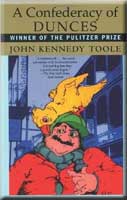
A Confederacy of Dunces by John Kennedy Toole - It was a Literary Fiction and Classics Editor's Recommended Book in 1996. They said: "I once went to the French Quarter in New Orleans, and there they were: the old, dented hot dog carts, designed and painted to look like giant rolling frankfurters, exactly as described in A Confederacy of Dunces. You'll have to read the book to find out why I spontaneously cracked up there on the street, laughing at the memory of the book's hero, misunderstood genius Ignatius Reilly, eating through his cart's inventory. That's only one hilarious moment among many from this novel, one of the cornerstones of the newly recognized Southern Wacko school of literature. " I agree. This Pulitzer Prize-winning novel has sold over three-quarters of a million copies and continues to earn critical acclaim. It is the story of Ignatius J. Reilly, a "Don Quixote of the French Quarter," and is a masterpiece of human folly and tragedy.
|
The Debt to Pleasure by John Lanchester - Amazon says: "A gorgeous, dark, and sensuous book that is part cookbook, part novel, part eccentric philosophical treatise, reminiscent of perhaps the greatest of all books on food, Jean-Anthelme Brillat Savarin's The Physiology of Taste. Join Tarquin Winot as he embarks on a journey of the senses, regaling us with his wickedly funny, poisonously opinionated meditations on everything from the erotics of dislike to the psychology of a menu, from the perverse history of the peach to the brutalization of the palate, from cheese as "the corpse of milk" to the binding action of blood. Martha says she liked it. She's the chef, she should know.
Andorra by Peter Cameron - Amazon says "Andorra, the tiny storybook nation snug in the Pyrenees between France and Spain is the setting for Peter Cameron's third book, a
lyrical tale that begins as a charming story of manners and romantic relations in the tiny township of La Plata, but develops into a darker (though still comic) story of deception and psychological intrigue. The author's earlier invocations of Proust and Austen give
way to impulses akin to Kafka or Camus. When should you stop trusting your narrator's memories and figure out what is really going on in this place? All is not what it seems, as the dark past of several characters returns to dim the brightness of the present
surroundings. The hyper-reality of the charming mountain town Cameron creates is the ideal setting for this engaging tale, told in perfect measure, tightly stitched, with no extra bits hanging loosely.
|